Healthcare information for asylum seekers, refugees and migrants
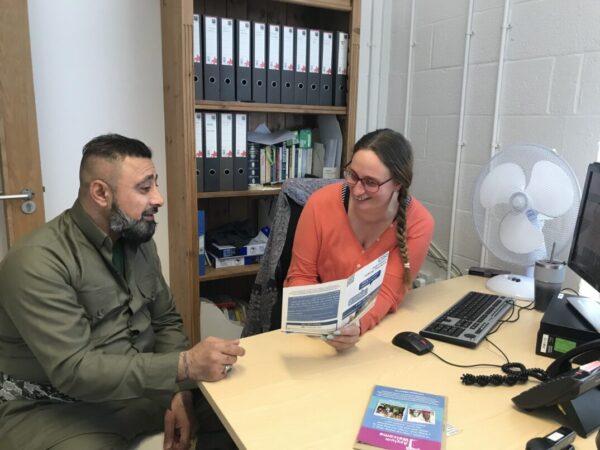
Here you can find information on healthcare and the UK National Health Service, the NHS. If you cannot find what you want here or you need more help, please contact Asylum Welcome.
What to do if someone is ill
If you are worried about your health or somebody else’s health and the situation is not life-threatening, you can get advice as follows:
- During office hours (8.30 – 17.00, Monday-Friday), call your doctor’s (GP) surgery.
- Visit your local pharmacist.
- If a health professional has given you a phone number to call when you are concerned about your condition, call that number.
- Call 111, and if you don’t speak English, ask for an interpreter. Or go online to 111.NHS.uk. You will be given advice, and they can arrange a home visit if needed.
- The out-of-hours 111 service provides urgent medical care from 18.30 to 8.00 Monday to Friday, and 24 hours a day at weekends and on bank holidays. It can help you if, for example, you have a fever or sickness but do not need to go to a hospital Emergency Department.
What to do in an Emergency

• Call 999 when your life or someone’s life is in danger. Describe what has happened. You will be sent an NHS ambulance if this is needed.
• In an emergency, you can also go straight to any hospital with an Accident and Emergency Department (A&E). These are open 24 hours. There are Emergency Departments at:
John Radcliffe Hospital in Oxford.
Horton General Hospital in Banbury.
There are other Out-of-Hours NHS Services in Oxfordshire:
• Minor Injuries / First Aid Units. You do not need to make an appointment. In these units, nurses can treat minor injuries.
These units can treat:
• Minor bumps to the head
• Sprains, broken bones, fractures and dislocated fingers
• Minor burns, cuts and bruises
• Nose bleeds
• Bites and stings
• Simple ear, nose and eye problems
Oxford / Minor Injury Unit
John Radcliffe Hospital, Headley Way, Headington, Oxford OX3 9DU
Tel: 0300 3047777
Open 8.30-18.30 (excluding bank holidays). Get directions to the hospital here.
The John Radcliffe A&E department has a service for minor urgent problems (often a long wait to be seen) as well as a major side for more serious emergencies.
Abingdon / Minor Injury Unit
Abingdon Community Hospital, Marcham Road, Abingdon OX14 1AG
Tel: 01865 903476
The service is available 7 days a week: 10.00 – 22.30. Get directions to the hospital here.
Witney / Minor Injury Unit
Witney Community Hospital, Welch Way, Witney OX28 6JJ
Tel: 01865 903841
The service is available 7 days a week: 10.00 – 22.30.
Get directions to the hospital here.
Bicester / First Aid Unit
Bicester Community Hospital, Piggy Lane (access via Coker Close), Bicester OX26 6HT
Tel: 01865 903976 (please call before visiting)
The service is available Monday to Friday – 18.00-23.00; weekends 08.30-23.00.
Get directions to the hospital here.
If you are worried, depressed, anxious or feel stressed and think you need help, there are people you can contact:
Refugee Resource offers free counselling and psychotherapy to refugees, asylum seekers and vulnerable migrants who are experiencing mental or emotional distress.They work with individuals, couples and families living in Oxfordshire.
Oxfordshire Talking Therapies is a free NHS service for people who are feeling low, anxious or stressed.
To contact: call 01865 901222 and ask for an interpreter. You will speak to an administrator who will take your details (including your name, address, date of birth, and registered GP) and book a telephone appointment with a member of the Talking Therapies team. Telephone opening hours are Monday & Friday: 8.00 – 17.00; Tuesday to Thursday: 8.00 – 20.00. Or you can fill in a form on the website. Please ask for an interpreter if you need one.
OXFORDSHIRE MIND provides advice and support to anyone experiencing mental health problems. If you need to speak in your language, they will use Google Translate when you call and LanguageLine when you have an appointment. MIND is open Monday to Thursday, 9.30 to 16.30; Friday 9.00 to 16.00.
To contact: call 01865 247788 or text 07451 277973 or email info@oxfordshiremind.org.uk.
Oxfordshire Safe Haven offers listening support to people over 18 who are having a mental health crisis. To contact them, phone, or ask someone to phone for you, give your name, a contact number and your language. They will phone you back on the same day with an interpreter.
To contact: call 01865 903037 (open 365 days a year from 11.30 to 21.00) or email osh@oxfordshiremind.org.uk.
Oxfordshire Sport in Mind runs some FREE daytime sports courses in Oxfordshire. You only need to apply once and you can then attend as many, or as few, classes as you want. The classes are not only for people with mental health conditions. If you are lonely, depressed or isolated these might help.
Barnardo’s Boloh Helpline supports the mental health and wellbeing of adult asylum seekers throughout the UK.
The Helpline is open: Monday – Friday (10am-8pm) and Saturday (10-3pm) via phone 0800 151 2605, webchat and email boloh.helpline@barnardos.org.uk
For refugees on the Ukraine and Afghanistan pathways, you can find information on Barnardo’s Refugee Family Helpline here.
Please remember to ask for an interpreter in your language if you need one. Everyone has a right to an interpreter when attending an NHS appointment.
The National Health Service

Everyone living in England can register with a GP (doctor) and receive treatment from a GP practice.
You do not need to provide proof of address or ID.
Guide to registering with a GP practice for asylum seekers and refugees.
How to register with a GP practice
Information on the NHS and the services for new migrants to the UK in English and other languages
Watch this subtitled video explaining the different NHS services, from General Practice to A&E, and when and how to use them. Select the settings icon at the bottom right of the screen > select subtitles > choose your language.
More information on health in different languages
Go to this website > select your language > select a topic you are interested in.
Anyone can register with a GP surgery. You do not need proof of address or immigration status. Print a card to take with you if you are having problems registering with a GP:
A GP surgery can refuse to register you because:
• they are not taking any new patients;
• you live outside the practice boundary, and they are not accepting patients from out of their area;
• you have been removed from that GP surgery register before;
• the surgery is a long way from your home, and you need extra care, for example home visits.
If you have problems registering with a GP surgery in Oxfordshire, you can contact:
If you are an asylum seeker in receipt of asylum support from the Home Office, you should receive an HC2 certificate which entitles you to full help with health costs, including NHS prescriptions, dental treatment, sight tests, wigs and fabric supports, and help towards the cost of glasses and contact lenses, and travel costs to receive NHS treatment. You should receive your HC2 certificate automatically.
If you are an asylum seeker but you do not receive asylum support from the Home Office, you can apply for help with health costs by completing an HC1 form.
If you are not an asylum seeker but are finding it difficult to pay for medicines or for glasses, you may get help by applying to the Low Income Scheme (LIS).
If you need help or more information, please contact Asylum Welcome.
• Pharmacists give confidential advice on medicines and common health conditions. They also dispense medicines prescribed by a GP. Some work in chemist shops so they are easy to find, others work in GP surgeries and in hospitals. If your GP gives you equipment, such as an asthma inhaler or glucose monitor, a pharmacist can show you how to use it.
• Opticians work in Optician shops in towns. They will do NHS sight tests. You can make an appointment for a test at one of their shops. You may have to pay for the test and for glasses, but people on asylum support, on some benefits or with some medical conditions do not pay. (Ask an Asylum Welcome advisor if you can apply for an HC2 certificate. This certificate provides free NHS sight tests, glasses and contact lenses and refund of necessary cost of travel to and from hospital for treatment.) Most opticians also offer advice on minor eye conditions such as sore, red or dry eyes.
Other medical professionals who offer help
• District and community nurses work in the community and in people’s homes and in care homes. They visit housebound patients in their own homes, helping people to manage their symptoms. They help families learn how to care for their relative and give help with managing medications. They can also support people whose life is ending.
• Physiotherapists help to restore movement for people affected by injury, illness or disability. They work in hospitals, some doctors’ surgeries and some can visit people at home.
• Occupational therapists work with patients They develop treatment plans to help people recover, improve or develop better living habits. They also help people manage their daily activities, time and social lifestyles.
For general eyecare
If you are registered with a local GP and have:
• Red, dry, gritty and uncomfortable eyes
• Irritation and inflammation of your eye
• A sticky discharge from your eye or a watery eye
• Flashes or floaters
• In-growing eyelashes
• A recent and sudden loss of vision or something in your eye
Go to this website and put in your postcode to find an optician near you who can help.
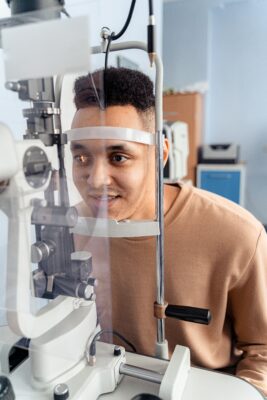
Call the optician you choose. They may not be able to speak your language so ask an advisor or friend to call for you. The person who answers the phone will ask about your symptoms and then a clinician will call you back by phone or video call.
If you then have an appointment with the optician, they may put drops in your eyes. You should not drive until the effects of the drops have worn off. If you need a further appointment at the hospital eye clinic one will be booked for you, or you may be advised to see your GP.
This service is not available for children under 6.
If you cannot get an appointment at one of the opticians on the list, you should try other opticians.
For eye emergencies
If you have an eye emergency – an eye trauma, chemical splash or severe eye pain – you should call Oxford Eye Hospital on 01865 234567. Select option 1, followed by option 1.
This telephone line is open:
Monday to Friday, 8.30 to 16.30 and Saturday, Sunday, bank holidays, 8.30 to 15.30.
You will be able to speak to an ophthalmic health professional (eye expert).
If you need advice out of hours, please call 111 and they will allocate a time for you in your local Emergency Department (A&E).
If there is a risk of sight loss, you can go directly to A&E (open 24/24) at:
John Radcliffe Hospital, Headley Way, Headington, Oxford OX3 9DU
For dental emergencies, phone 111 and ask for a translator if you need one.
Finding an NHS dentist
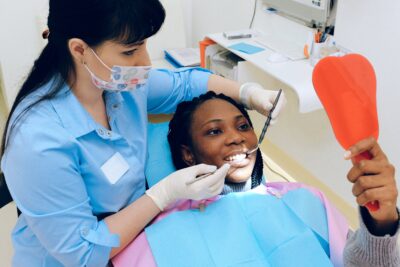
Everyone should have good-quality NHS dental services. To find dental practices that take NHS patients near you search for one here by postcode. Phone the dentist to ask if there are any appointments. You may have to phone more than one dentist. The dentist may not be able to see you at once, you may have to go on a waiting list.
If you are an asylum seeker and have an HC2 certificate, treatment is free.
If you are not an asylum seeker but are having trouble paying, please ask an Asylum Welcome advisor about the NHS Low Income Scheme.
Problems finding an NHS dentist?
If you cannot find a dentist who accepts NHS patients, you should call NHS England’s Customer Contact Centre on 0300 311 2233.
Dental care in different languages
Go to this website > select a language > select ORAL HEALTH.
To get information in other languages, use the select language Google Translate button at the bottom of the page.
Maternity Care in the UK
In the UK, maternity care is provided by Midwives. Every pregnant person is under the care of a named midwife, who will plan your care for pregnancy, birth and the first days with your new baby. The midwife will provide most of your care herself, and arrange for you to see other professionals (such as a doctor) or support workers as necessary.
What is a midwife?
Midwives provide skilled, knowledgeable and compassionate care for childbearing women. Midwifery care, provided by trained midwives working in partnership with other professionals in a well-resourced health service, has been shown to improve outcomes for women, infants and families.
In the UK, midwives are required to attend university and obtain a degree which has been approved by the Nursing and Midwifery Council (NMC). They are then licensed and regulated by the NMC and required to uphold its professional standards.
How can I see a midwife?
If you are pregnant, you can access a midwife by contacting your GP surgery and requesting a midwife appointment.
You can read more about what to expect at your first midwife appointment here.
You can read more about the antenatal (pregnancy) care you can expect here.
Information about antenatal care is also available in Dari, Pashto, Russian and Ukrainian.
How can I find information and advice?
The NHS ‘Mum and Baby’ app provides information on pregnancy, birth and postnatal care, as well as local information and a guide to your appointments and options for birth. Download the app from Google Play or the Apple Store.
Having a safe pregnancy: Advice and information for a safer pregnancy in Arabic, Bengali, Chinese, English, French, Polish, Portuguese, Punjabi, Spanish, Turkish, Ukrainian, and Urdu is available here.
Maternity safety information in Amharic, Arabic, Bengali, English, Farsi, Hundi, Kurdish, Somali, Spanish, Tigrinya and Urdu is available here.
What tests will I be offered?
Tests during pregnancy: Information about pre-eclampsia and why blood pressure and urine is tested in pregnancy in Albanian, Farsi, French Kurdish, Somali, Urdu and other languages is available here.
You can watch a video about the importance of monitoring fetal movements here. This video is also available in Albanian, Arabic, Farsi, Somali and Urdu.
Information about screening tests offered to you and your baby in Arabic, French, Somali, Urdu and other languages is available here.
A video about screening tests, with subtitles in Arabic, French, Somali, Urdu, and other languages is available here.
What will happen during labour and birth?
Information about labour and birth in English, Dari, Pashto, and other languages can be found here.
Information about pain relief in labour and for caesarean sections in Albanian, Arabic, Dari, Farsi, French, Kurdish, Spanish, Tigrinya, Urdu and other languages is available here.
How do I feed and keep my baby safe?
Information about breastfeeding in the first few days is available in English, Dari, and Pashto.
Information on breastfeeding and bottle feeding in Arabic, Urdu and other languages is available here.
Information on safe sleeping practices is available in Arabic, Farsi, Kurdish, Spanish and Urdu.
Communicating your needs in childbirth
Your midwife and any doctors involved in your care will want to discuss your wishes with you. Watch this video to understand how your care will be personalised to meet your needs.
Your Birth Rights
Everyone having a baby has the right to be treated with kindness, dignity and respect. Information about your human rights in childbirth in English, Amharic, Arabic, Dari, Farsi, French, Kurdish Sorani, Spanish and Urdu and other languages is available here.
What is parenthood like?

Tips and advice for new parents on a variety of topics in English, Arabic, Dari, Farsi, Pashto, Tetum, Tigrinya, Urdu and other languages is available here.
Further information in several languages on subjects such as miscarriage, diabetes and genital cutting has been collated by Laura Bridle and is available here.
Oxfordshire Sexual Health Service (OSHS) provides free sexual health screening (tests), treatment, contraception and advice. They also provide care and treatment for people living with HIV. The service is committed to providing sexual health services to everybody – whatever their age, gender or sexuality.
To make an appointment, please call 01865 231231.
Clinic U (an inclusion health clinic) provides contraception and sexual healthcare to people who need extra support and longer appointment times for whatever reason. This clinic is open by arrangement only (please do not drop-in).
Please call 01865 231231 or email inclusionsexualhealth@ouh.nhs.uk for an appointment.
Clinic U is held at the East Oxford (Rectory Road) Clinic.
CONFIDENTIALITY: The reception team will ask a few simple questions to ensure you are booked into the right appointment – this information is kept confidential and not shared outside of the service.
Drop-in clinic (no appointment required)
Under 18s – young persons drop-in
Monday 14.00 – 18.00 (last consultation at 17.30).
General drop-in – available to all
Monday 09.00 – 12.00 (last consultation at 11.30); Wednesday 13.00 – 17.30 (last consultation at 17.00).
Please be prepared to sit and wait. The general drop-in session can be very busy – you may be waiting up to three hours, although patients under 18 and those with other vulnerabilities or clinical urgency will be prioritised. The session may close early if it reaches capacity.
Please note that routine HIV care is not available at these drop-in sessions.
This drop-in clinic is held at the Oxford (Churchill Hospital) Clinic.
Have you suffered sexual assault or sexual abuse?
Sexual assault or abuse can happen to anyone; it may be a single event or happen repeatedly.
We know that some people seeking asylum have experienced harm from sexual violence and abuse, either before their arrival to the UK or whilst in the UK, or both. For people seeking asylum, it is often difficult to access the right support and care in the UK.
If you have experienced harm from sexual violence or abuse, you need to understand your legal rights and how to access help for past or current sexual abuse or assault.
You can find information on sexual assault and sexual abuse and how to get help and support here.
Vaccination is the most effective way of preventing many infectious diseases.
You can get all the routine vaccines free from the NHS for you and your family. Click on this link for details of all NHS vaccines and when to have them:
NHS vaccinations and when to have them
If you think that you or your children have been vaccinated already, discuss this with your GP or health visitor. It is safe to have vaccines repeated again if there is any uncertainty.
How do vaccines work?
Vaccines teach your immune system to create antibodies that protect you from diseases. It’s much safer than catching the diseases themselves. If enough people are vaccinated, it’s harder for the disease to spread to those people who have not been vaccinated (this is called herd immunity).
What’s in a vaccine?
Most vaccines contain a tiny amount of bacteria, virus or toxin that’s been weakened or destroyed in a laboratory first. This means there’s a very low risk of healthy people catching a disease from a vaccine. Vaccines may contain small amounts of other ingredients too that help make the vaccine more effective. The main ingredient is water. There is no evidence that the other ingredients are harmful unless you have a specific allergy to them.
Vaccine safety
All vaccines are thoroughly tested to make sure they will not harm you or your child. The process of safety testing usually takes many years while the vaccine is put through clinical trials. Once the vaccine is being used it is also monitored for any rare side effects (by the UK Medicines and Healthcare products Regulatory Agency) and to check that it’s still effective.
Side effects of vaccination
Most of the side effects of vaccination are mild and do not last long.
The most common side effects include:
- The area where the needle went in looking red, swollen and feeling a bit sore for 2 to 3 days
- Feeling a bit unwell or developing a fever for 1 or 2 days
- Older children and adults may feel faint
- Feeling tired, having a headache, mild fever or flu-like symptoms
- Some children might cry and be upset immediately after the injection. The normally feel better after a cuddle.
Allergic reactions
It’s very rare for anyone to have a serious allergic reaction after a vaccination. If this does happen, it usually happens within minutes. The person who gives the vaccination is trained to deal with allergic reactions immediately. Prompt emergency treatment normally leads to a good recovery.
Anti-vaccine stories and vaccine hesitancy
Anti-vaccine stories are often spread online through social media. Vulnerable community groups may be influenced by the misinformation. The stories are not usually based on any true scientific evidence. You could put yourself and your family at risk of serious illness if you refuse vaccination. All the current evidence tells us that getting vaccinated is safer than not getting vaccinated.
More information on vaccines and how they work
You can find more information on:
- RSV vaccine
- MMR vaccine
- COVID-19 vaccines
- Shingles vaccine
- Gelatine in vaccines
in this pocket-size guide All about Vaccines (produced by Oxford Vaccine Group). To translate this guide into another language, scan the QR code and copy and paste the text.
Always get your vaccine and health information from trusted sources, such as the NHS or World Health Organisation (WHO).
